Where India is pumping its groundwater dry
Punjab pumps out 156% of the groundwater it can sustainably draw each year. Rajasthan pumps 147% and Haryana 137%. India as a whole uses 61%, about the same as in 2004.
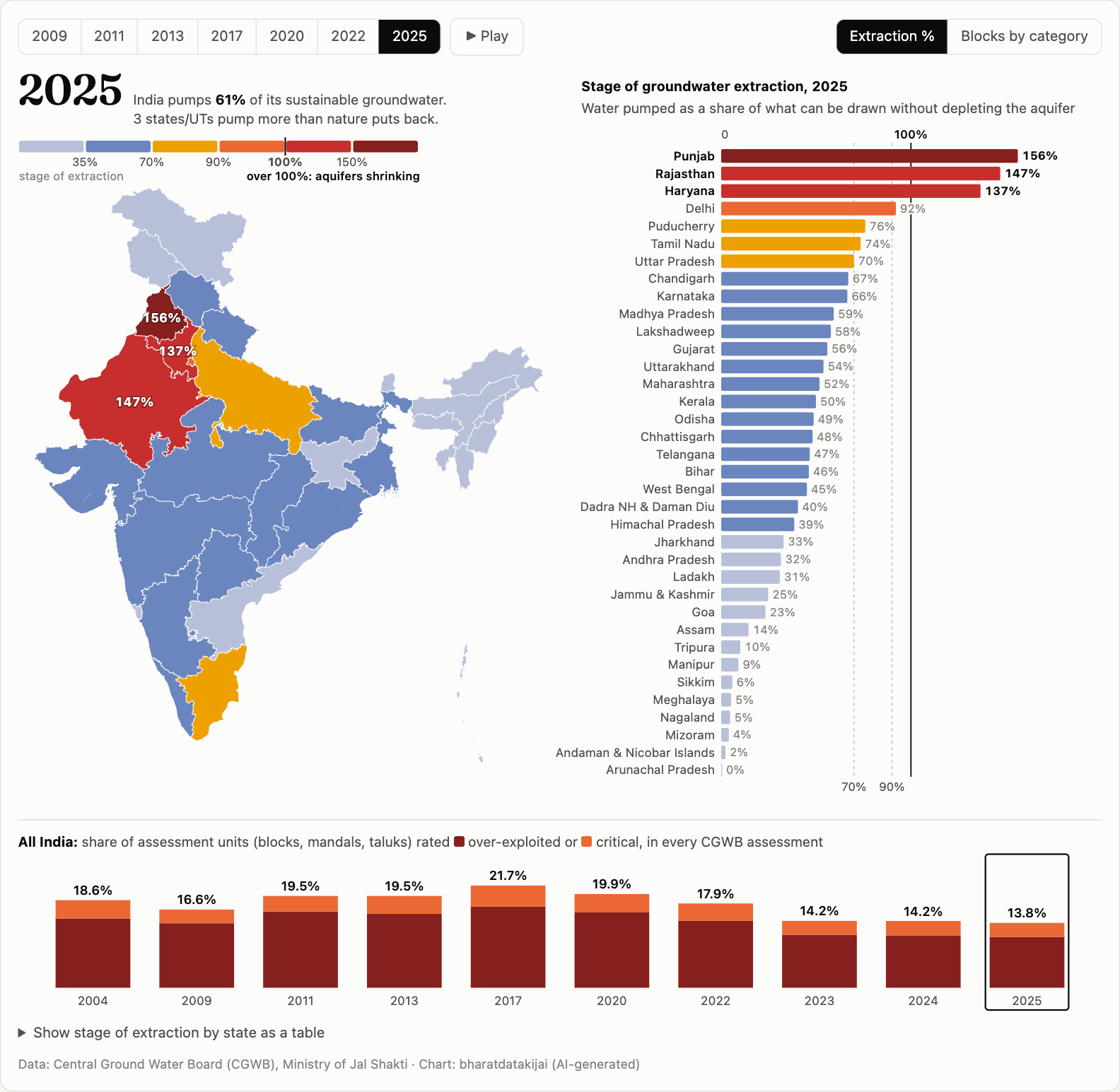
Every few years the Central Ground Water Board and the states estimate how much groundwater each part of India can pump without running its aquifers down, and how much it actually pumps. The ratio between the two is the stage of extraction. Above 100%, water tables are falling.
India as a whole sits at 60.6% in the 2025 assessment, about where it was in 2004 (58%). The national number hides a hotspot in the north-west. Punjab pumps 26.3 billion cubic metres a year against a sustainable 16.8, a stage of 156%, and 111 of its 153 blocks are over-exploited. Rajasthan (147%) and Haryana (137%) have been above 100% in every assessment since at least 2009.
Delhi is the exception. It fell from 138% in 2009 to 92% in 2025, which takes it below the 100% line. Across India, the share of blocks rated over-exploited or critical peaked at 21.7% in 2017 and was 13.8% in 2025. Part of that fall comes from states redrawing and regrouping their assessment units, so read the trend with some caution.
Press play or pick a year to see the map change, and switch the bars to Blocks by category to see how much of each state is over-exploited. Hover over a state for its full history.